
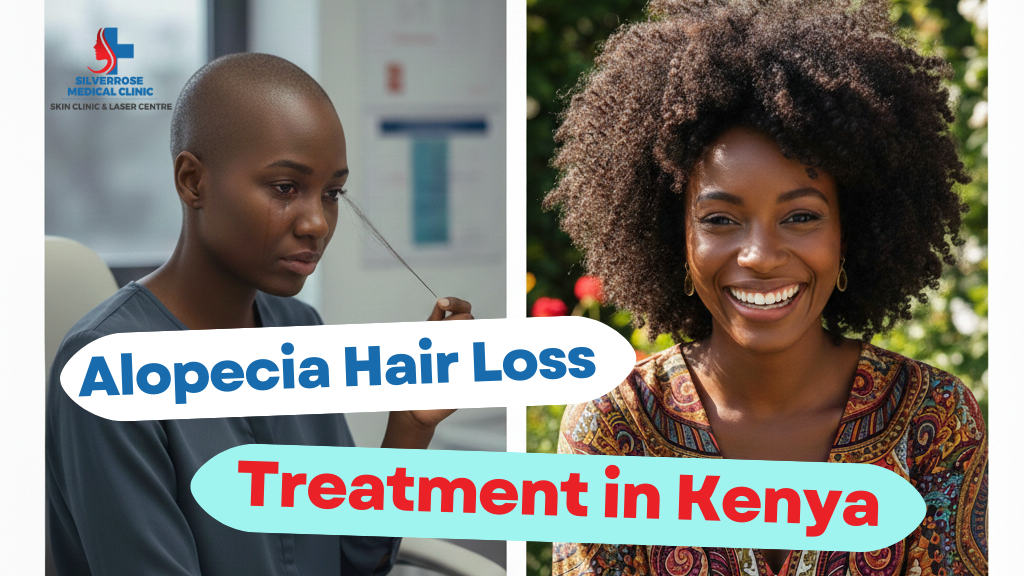
Hair loss can feel confusing and emotionally draining, especially when it happens suddenly. Alopecia affects men, women, and even children in Kenya. The good news is that with early diagnosis and professional care, hair loss treatment in Kenya can lead to visible improvement and restored confidence. Hair loss is no longer a silent struggle. From sudden shedding to visible bald patches, many people experience distress before they ever understand what is the cause of hair loss. At Silverrose Skin Clinic, alopecia hair treatment is approached medically, not cosmetically. With guided care, many patients experience reduced shedding and regrowth using hair treatment for hair loss that is safe and effective.
What is Alopecia?
Alopecia is the medical term used to describe the loss of hair from the body where it would normally grow, most commonly from the scalp. While often viewed as a cosmetic concern, alopecia is a complex medical condition that can impact a patient’s psychological well-being and quality of life.
What causes Hair Loss?
Hair loss is rarely caused by a single factor, thus the need for specialized diagnosis to determine the actual cause. Some of the common causes of hair loss include:
- Genetics: The most common cause, where a family history of thinning leads to predictable patterns of loss over time
- Autoimmune Response: In conditions like Alopecia Areata, the body’s immune system mistakenly attacks the hair follicles.
- Hormonal Changes: Significant shifts during pregnancy, menopause, or due to thyroid imbalances can trigger temporary or permanent shedding.
- Physical Strain (Traction): Very common in our local context, this is caused by prolonged tension on the hair roots from tight hairstyles like braids, cornrows, or heavy extensions.
- Nutritional Deficiencies: A lack of essential nutrients, such as iron, protein, or Vitamin D, can weaken the hair structure.
Diet plays a major role. A very common question is which vitamin deficiency causes hair loss. Low iron, vitamin D, zinc, and biotin are frequently linked to excessive shedding of hair. Patients also ask, which food stops hair fall? Foods rich in protein, leafy greens, eggs, legumes, and healthy fats help strengthen hair and support scalp health.
Hair loss is also mostly related to the thyroid gland, with individuals with poor gut health experiencing issues with nutrient absorption.
Understanding the cause leads to more effective hair loss treatments.
Key Symptoms and Early Signs
Recognizing the early warning signs of alopecia is critical, as early clinical intervention often determines whether your hair will grow back after alopecia.
- The Early Signs of Hair Loss.
Excessive Shedding: Finding an unusual amount of hair on your pillow, in the shower drain, or in your comb.
Widening Part: A subtle increase in the distance between hair strands where you normally part your hair.
Tenderness or Itching: Some forms of inflammatory alopecia begin with a “burning” or itchy sensation on the scalp before hair falls out.
Thinning Edges: For those who wear protective styles, a receding hairline around the temples is a major red flag for Traction Alopecia.
- Advanced Symptoms
Patchy Bald Spots: Smooth, coin-sized circular patches that appear suddenly.
General Thinning: A reduction in the overall volume or “thickness” of a ponytail.
Scalp Visibility: The scalp becomes more visible through the hair, particularly under bright lights.
Scarring: In cases like CCCA (Central Centrifugal Cicatricial Alopecia), the scalp may look shiny and smooth, indicating that the hair follicles have been replaced by scar tissue.
While our hair is a cherished part of our identity, modern dermatology offers numerous paths to restoration. If you notice these early signs, seeking a consultation at a reputable clinic is the best first step toward recovery.
Can Hair Grow Back After Alopecia?
A frequent concern is, can your hair grow back after hair loss? In many cases, yes. When follicles are still alive, regrowth is possible with timely treatment. This is why early diagnosis matters so much.
Some people search for ways to regrow hair naturally in 3 weeks. While full regrowth takes time, many patients notice reduced shedding and early regrowth within weeks when medical treatment and lifestyle changes are combined. The right hair growth treatment supports the scalp while addressing internal triggers.
How to Stop Hair Loss Immediately?
People experiencing sudden shedding often ask how to stop hair fall immediately. The fastest results come from
- calming scalp inflammation
- correcting deficiencies.
- Avoiding tight hairstyles, harsh chemicals, and excessive heat is crucial.
Medical scalp therapy and professional-grade treatments help stabilize hair fall. When patients ask, how do I stop my hair from falling, the answer always starts with identifying the underlying cause rather than guessing.
Hair Loss Diagnosis
Due to the many types of hair loss, with some looking similar in early stages, and the different causes, the best dermatologists in Kenya use specific clinical tests to identify the root cause.
- The Clinical Scalp Examination
Before laboratory tests, a skin specialist Nairobi usually performs a hands-on assessment including the:
- The Pull Test: The doctor gently tugs on a small bundle of hair, and if more than 10% come out easily, it indicates an “active” shedding phase.
- The Tug Test: The doctor holds a hair strand at both ends and tugs to check for brittleness. This helps identify “hair shaft abnormalities” where the hair is breaking rather than falling from the root.
- Trichoscopy: Using a handheld digital microscope (like a Folliscope), the doctor examines the scalp at 100x magnification. This reveals “miniaturization” of follicles (common in genetic thinning) or scalp redness and scaling (indicative of inflammation).
- Blood Panels (Searching for Internal Triggers)
Kenyan skin specialists often request blood work to rule out systemic issues that affect hair growth:
- Ferritin & Iron Studies: Low iron is a leading cause of hair thinning in women.
- Thyroid Function: Both overactive and underactive thyroids can cause hair to become dry, brittle, and prone to falling out.
- Hormonal Profile: Tests for DHT (Dihydrotestosterone), Testosterone, and Prolactin are common, especially if the patient also has acne or irregular menstrual cycles (PCOS).
- Nutritional Panel: Checking levels of Vitamin D, B12, and Zinc, as deficiencies in these are highly linked to sudden shedding.
- AI Skin Analysis in Nairobi
AI skin analysis in Nairobi has emerged as a powerful tool in the early and precise diagnosis of alopecia, transforming how clinics and dermatologists assess hair and scalp conditions. At Silverrose Skin Clinic, this technique allows:
- Early detection of alopecia: AI can identify subtle changes in hair follicles before visible hair loss becomes severe.
- Accurate classification: AI systems analyze multiple parameters simultaneously, helping distinguish between conditions like alopecia areata and androgenetic alopecia with higher accuracy.
- Progress Tracking: AI skin analysis can store and compare results over time, making it easier to monitor whether a treatment plan is working or needs adjustment.
Best Alopecia & Hair Loss Treatments Available in Kenya
With an understanding of what is causing hair loss, the best dermatologists in Kenya, like Silverrose Skin Clinic, can now offer effective hair treatment for hair loss without surgery. Many patients prefer the best non-surgical hair restoration options available because they are safer, more affordable, and require no downtime.
Non-Surgical Hair Restoration Options
These treatments stimulate blood circulation and awaken dormant follicles. They are ideal for early-stage hair loss and are widely used in professional hair loss treatment in Kenya clinics.
Medications & Medical Treatments
One commonly prescribed option is Minoxidil for women, which helps prolong the hair growth phase and reduce shedding. For autoimmune-related hair loss, doctors may recommend an alopecia areata treatment cream to reduce inflammation. Patients often ask which medicine is better for hair loss, but the correct answer depends on diagnosis, not popularity.
Laser Technique in Nairobi
At Silverrose Skin Clinic, the best skin specialist Nairobi will take the patient through Low-Level Laser Therapy (LLLT), which uses controlled light energy to stimulate hair follicles. The laser light penetrates the scalp and increases cellular activity in the follicles, encouraging them to move from the resting phase into the growth phase.
Its main impacts include:
- Improved blood circulation to the scalp
- Increased oxygen and nutrient delivery to hair follicles
- Reduced inflammation around follicles
- Stimulation of weak or miniaturized follicles
Over time, this may result in reduced hair shedding, thicker hair strands, and improved hair density.
Hair Growth Serums Explained
Many patients want to know how popular hair regrowth serum works. Medical-grade hair growth serum products nourish follicles, improve circulation, and support healthy regrowth when used correctly under professional guidance. It is necessary to use a hair growth serum prescribed by a professional skin specialist.
Alopecia Treatment at Home: What Works & What Doesn’t
There is growing interest in alopecia treatment at home, especially using oils and natural remedies. While home care can support scalp health, it cannot treat autoimmune or hormonal causes on its own.
Parents frequently ask about alopecia treatment at home for kids. Children require gentle, medically supervised care to avoid worsening the condition. Learning how to prevent hair thinning naturally at home is helpful, but professional care remains essential.
Why Choose Silverrose Skin Clinic for Alopecia Treatment?
Silverrose Skin Clinic is among the top rated clinics offering hair loss solutions in Nairobi. The clinic is known for accurate diagnosis, ethical care, and personalized treatment plans that address both the scalp and underlying health factors.
Patients seeking alopecia hair treatment, hair growth, or advanced hair loss treatment benefit from professional dermatological care focused on long-term results, not temporary fixes. Book your consultation today and take the first confident step toward healthier, fuller hair.